

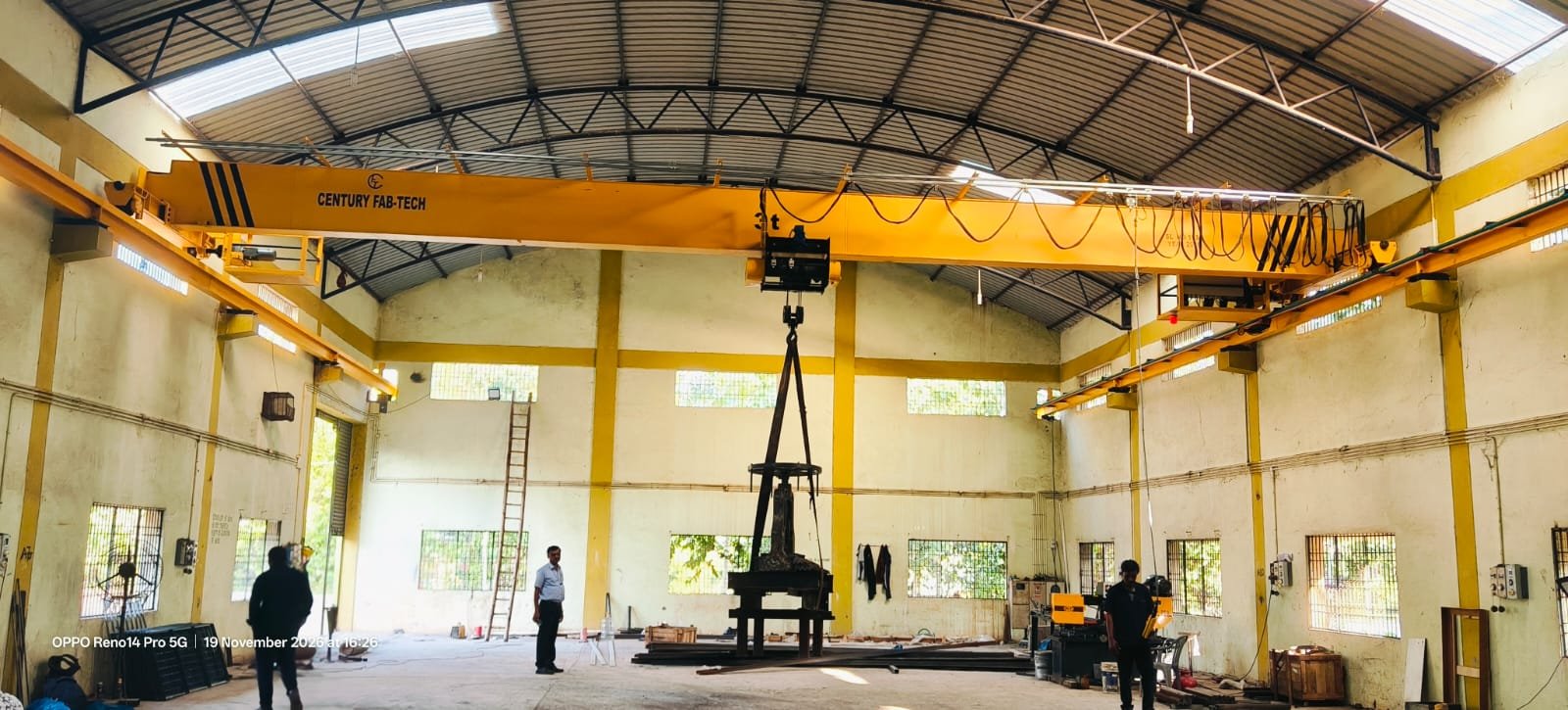
The Complete Guide to Single Girder EOT Cranes: Efficiency Meets Cost-Effectiveness
In modern manufacturing, warehousing, and heavy engineering, moving materials safely and quickly is the backbone of productivity. Among the various lifting solutions available today, Single Girder Electric Overhead Traveling (EOT) Cranes stand out as one of the most versatile, economical, and widely used systems across industries.
Whether you are setting up a new fabrication unit or upgrading an existing assembly line, understanding how a single girder EOT crane works—and whether it fits your facility—can save significant capital and floor space.
What is a Single Girder EOT Crane?
A Single Girder EOT Crane consists of one primary bridge girder supported at both ends by end carriages that run along overhead runway rails. An electric wire rope hoist or chain hoist travels along the bottom flange of the single bridge beam, providing vertical lifting and horizontal movement across the span of the facility.
Because they use a single main beam rather than two, these cranes are lighter, more compact, and easier to install than their double-girder counterparts.
Key Advantages of Single Girder EOT Cranes
- Cost-Effective Investment
With fewer structural steel components and a lighter deadweight, single girder cranes require less material to manufacture. This translates into lower upfront purchase costs, reduced shipping expenses, and simplified installation.
- Reduced Load on Building Structures
Because the crane itself is lighter, it puts significantly less stress on your facility’s columns and runway beams. If you are operating in a pre-engineered building (PEB) or an older warehouse with load limits, a single girder crane often eliminates the need for costly structural reinforcements.
- Maximized Floor Space & Low Headroom Options
Overhead cranes keep your factory floor completely clear of obstructions. Furthermore, single girder cranes can be configured with low-headroom hoists, allowing you to achieve maximum hook height even in buildings with low ceiling clearances.
- Faster Installation & Easier Maintenance
Fewer mechanical components mean quicker assembly on-site, getting your operations up and running faster. Routine inspections and servicing are also more straightforward, minimizing downtime.
Typical Technical Specifications
While single girder EOT cranes are custom-engineered to fit specific facility dimensions, standard configurations typically fall within these ranges:
- Lifting Capacity:5 Ton to 20 Tons
- Span Length: Up to 40 Meters
- Lifting Height: Customizable up to 20+ Meters (depending on building height)
- Duty Class: IS 3177 / FEM / CMAA compliant (Light to Medium-Heavy duty cycles)
- Control Options: Pendant push-button station, wireless radio remote control, or cabin control
Single Girder vs. Double Girder EOT Cranes
Choosing between a single and double girder crane depends on your load requirements and operational intensity.
| Feature | Single Girder EOT Crane | Double Girder EOT Crane |
| Load Capacity | Light to Medium (Up to 20 Tons) | Heavy to Ultra-Heavy (Up to 120+ Tons) |
| Initial Cost | Lower | Higher |
| Deadweight | Lighter (Less stress on building) | Heavier (Requires stronger support) |
| Hook Height | Good (Great with low-headroom hoist) | Maximum (Hoist sits between girders) |
| Maintenance | Easier and less frequent | More complex; often includes walkways |
When to choose Single Girder: If your loads are under 20 tons, your duty cycle is light-to-moderate, and you want the most economical solution without sacrificing reliability.
Common Industrial Applications
Single girder EOT cranes are workhorses across a wide variety of sectors, including:
- Automotive & Ancillary Units: Moving engines, chassis parts, and dies along assembly lines.
- Warehousing & Logistics: Loading, unloading, and stacking heavy pallets or steel coils.
- Steel & Metal Fabrication: Handling raw plates, structural beams, and finished weldments.
- Machine Shops & Maintenance Bays: Positioning heavy machinery and assisting with equipment repairs.
- Power & Paper Mills: Routine maintenance lifting and material transfer.
Essential Safety Features to Look For
When investing in an EOT crane, operator and workplace safety should never be compromised. Ensure your crane includes:
- Overload Limit Switch: Prevents lifting loads beyond the rated capacity.
- Upper & Lower Hook Limit Switches: Stops hoist travel automatically to prevent over-hoisting or over-lowering.
- Anti-Collision Devices: Essential if two cranes operate on the same runway bay.
- Fail-Safe Electromagnetic Brakes: Automatically engage in the event of a power failure.
- Emergency Stop Button: Accessible on both the pendant and remote control for instant shutdown.
Ready to Optimize Your Material Handling?
A well-engineered Single Girder EOT Crane delivers years of dependable service while keeping your capital and operational costs under control.
Looking for a custom-built EOT crane tailored to your facility’s span, height, and load requirements? Contact our engineering team today for a free site consultation and detailed technical quote!