

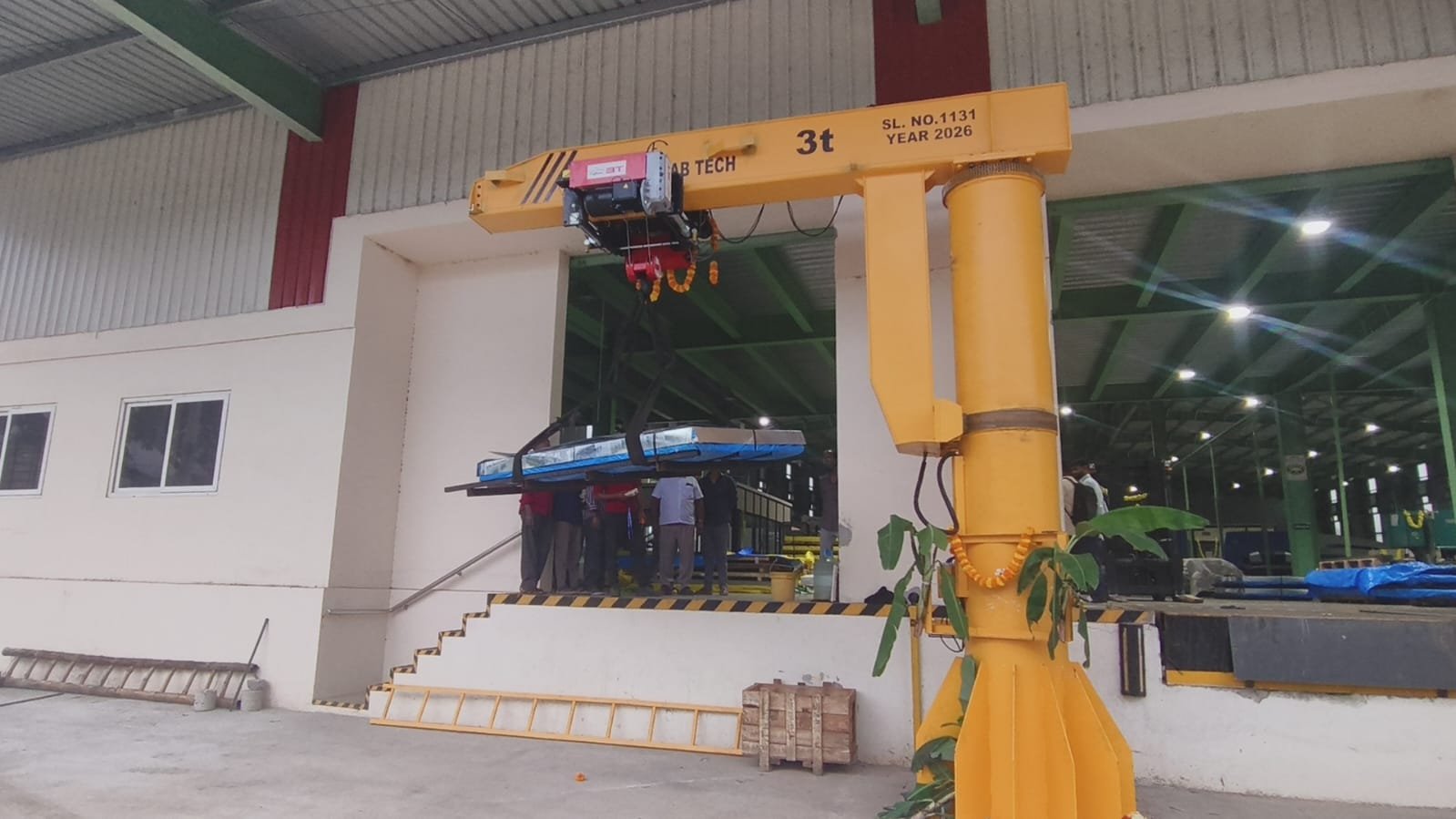
What is a Jib Crane? A Complete Guide to Types, Benefits, and Applications
In busy manufacturing plants, warehouses, and assembly lines, moving heavy loads safely and quickly is essential for keeping operations on schedule. While overhead bridge cranes handle large-scale lifting across an entire facility, smaller workstations often need dedicated lifting power.
This is where a jib crane comes in. Cost-effective, versatile, and easy to operate, jib cranes bridge the gap between manual lifting and massive overhead systems.
What is a Jib Crane?
A jib crane is a type of lifting device where a horizontal arm (called a jib or boom) supports a movable hoist. The arm is fixed to a wall or a floor-mounted pillar, allowing the hoist to lift, lower, and swing heavy materials within a localized, semi-circular or full-circular work area.
Common Types of Jib Cranes
Choosing the right jib crane depends on your facility’s layout, ceiling height, and lifting requirements. Here are the three most popular designs:
- Freestanding Jib Cranes: Mounted directly to a reinforced concrete floor via a sturdy steel pillar, these cranes offer 360-degree rotation. They are ideal for open work areas where no structural support columns exist nearby.
- Wall-Mounted Jib Cranes: Bolted directly onto an existing building column or structural wall, these cranes provide up to 200 degrees of rotation. Because they don’t require a floor foundation, they save valuable floor space.
- Articulating Jib Cranes: Featuring two connected arms that pivot independently, articulating cranes can reach around corners, obstacles, and machinery. They are perfect for tight workspaces or loading materials directly into enclosed CNC machines.
Key Benefits for Your Facility
Adding jib cranes to individual workstations offers immediate operational advantages:
- Boosts Productivity: Workers no longer have to wait for a shared overhead bridge crane to become available, reducing downtime at busy stations.
- Improves Workplace Safety: Eliminating manual heavy lifting drastically lowers the risk of back injuries, muscle strains, and dropped loads.
- Maximizes Floor Space: Wall-mounted and column-mounted models keep floors completely clear for foot traffic, forklifts, and storage.
- Cost-Effective Solution: Jib cranes are significantly less expensive to purchase, install, and maintain than full-span gantry or overhead bridge cranes.
Popular Industrial Applications
Jib cranes are used across nearly every heavy-duty industry, including:
- Manufacturing & Assembly: Positioning heavy components on assembly lines.
- Machine Shops: Loading and unloading raw materials onto lathes, mills, and CNC machines.
- Shipping & Receiving: Moving pallets and crates on and off loading docks.
- Marinas & Shipyards: Lifting small boats, engines, and marine equipment near the water.
How to Choose the Right Jib Crane
Before purchasing a jib crane, evaluate these four critical factors:
- Load Capacity: Determine the maximum weight you need to lift (typically ranging from 500 kgs up to 5000 kgs), including the weight of the hoist and rigging.
- Span (Reach): Measure the distance from the mounting point to the end of the boom to ensure it covers your entire work cell.
- Height Under Boom (HUB): Calculate the vertical clearance required from the floor to the underside of the boom so your hoist and load clear all obstacles.
- Structural Support: Verify whether your concrete floor can handle a freestanding foundation or if your building columns can support the lateral forces of a wall-mounted unit.
Ready to Upgrade Your Material Handling?
Investing in the right jib crane streamlines your workflow, protects your team, and pays for itself through higher efficiency.
Need help selecting the best crane for your workspace? Contact our engineering team today for a custom quote and layout consultation!